
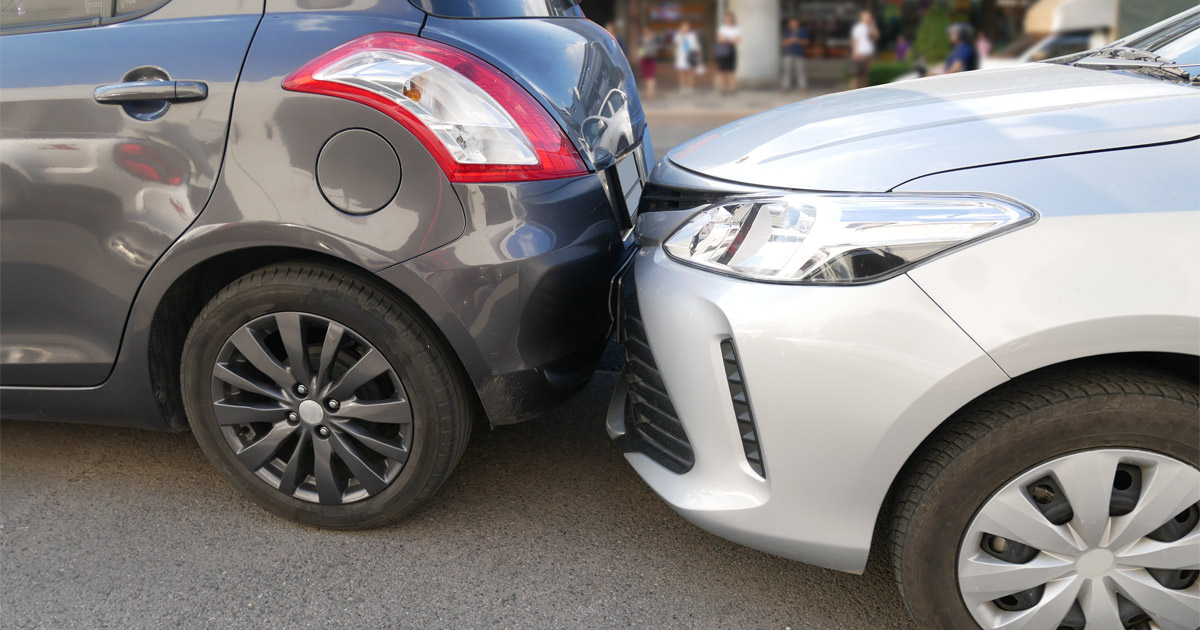
Drive-thru lanes are associated with convenience and quick service, not car crashes. Yet, accidents do happen in these confined spaces. These collisions can cause minor property damage, but some of them lead to bodily injury, disputes with insurance companies, or lawsuits. Liability in these cases can be contested, and each party may argue that the other acted improperly.
Who Has the Right of Way in a Drive-Thru Lane?
These lanes are private property, and drivers must still obey posted signs and yield appropriately. Generally, vehicles already in the lane have the right of way; a driver who attempts to cut into the line or backs up without checking their surroundings may be at fault.
With these crashes, courts and insurance carriers typically apply the same principles of negligence used in other motor vehicle accidents. If a driver fails to exercise reasonable care and that failure leads to a collision, they may be held liable for any resulting harm or loss.
Can a Business Be Held Responsible for a Drive-Thru Accident?
Possibly. Property owners have a duty to maintain reasonably safe premises. When that duty is not met and the condition of the property contributes to a collision, liability may extend beyond the drivers involved.
If the property layout is confusing or visibility is obstructed, the business may share responsibility for the incident. For example, if the design of the lane encourages sudden merging, lacks proper signage, or has blind corners, the premises owner might be partially at fault.
Additionally, if an employee of the business contributes to the incident—for example, by directing a driver improperly or obstructing traffic—the employer could be included in a claim.
What If Both Drivers Were at Fault?
Pennsylvania follows a modified comparative negligence rule. If both drivers share blame, fault is divided based on each party’s degree of responsibility. A driver may still recover compensation as long as their share of fault does not exceed 50 percent. If one driver is found to be more than 50 percent responsible, they may be barred from recovering damages.
For example, if one driver cut into the drive-thru lane and another was speeding or not watching the vehicle ahead, both may be found partially at fault. An insurance adjuster or court would examine each party’s conduct before assigning percentages of liability.
What Evidence Is Used to Determine Fault?
Establishing fault requires evidence; examples include photographs of the scene, witness statements, dashcam footage, or surveillance video from the business. Statements from drivers or employees, as well as any police report, may also be reviewed.
Damage patterns on vehicles can help indicate how the collision occurred. In some cases, accident reconstruction may be used to assess angles of impact, braking distances, or whether a driver was distracted.
The clearer the documentation, the easier it becomes to evaluate fault. Insurance carriers use this information when determining how to handle claims and whether one party owes compensation to another.
What Happens If Someone Is Injured in a Drive-Thru Accident?
Even though these are low-speed environments, serious injuries can occur. Neck, back, and head injuries are not uncommon in rear-end collisions, which often happen when drivers are distracted or following too closely. If someone is injured, they may pursue a personal injury claim against the driver or property owner, depending on the circumstances.
A Media Car Accident Lawyer at Eckell Sparks Can Help With Your Case
Every detail of a drive-thru accident matters, and liability may not always be straightforward. Our Media car accident lawyers at Eckell, Sparks, Levy, Auerbach, Monte, Sloane, Matthews & Auslander, P.C. can explain your legal options and help you move forward with a claim. For more information, submit our online form or call 610-565-3700. Located in Media and West Chester, Pennsylvania, we serve clients in Delaware County, Chester County, and Montgomery County.