
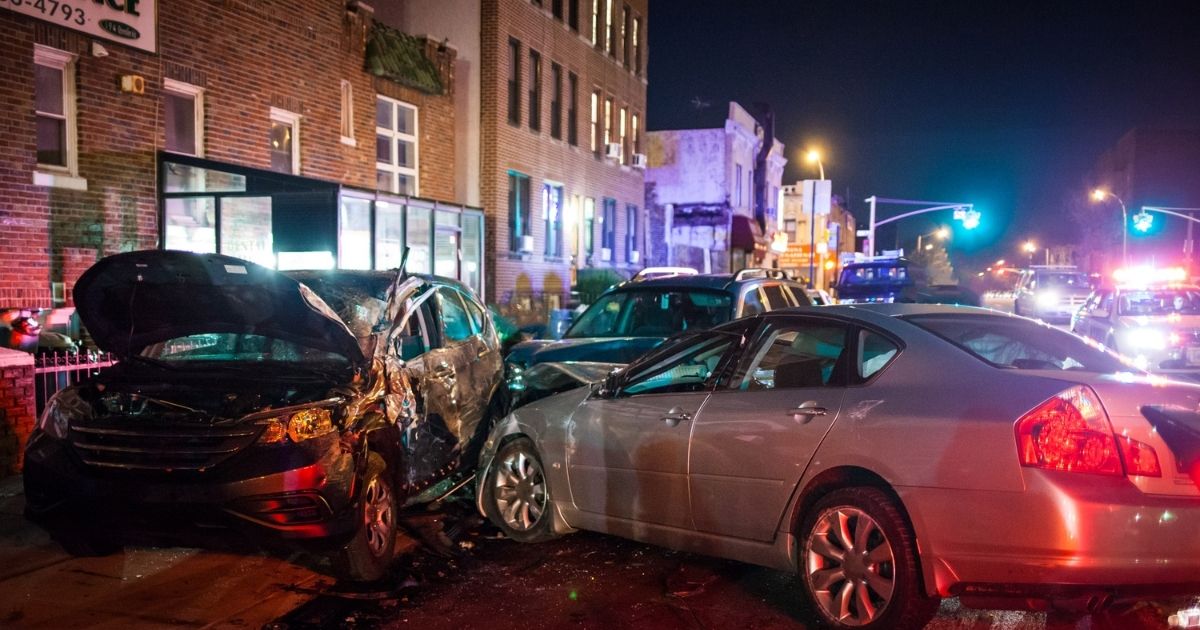
T-bone car accidents, also known as side-impact or broadside collisions, occur when the front of one vehicle strikes the side of another vehicle at a perpendicular angle. The shape of the resulting impact resembles the letter “T,” giving the collision its name. If you were involved in such a crash, the following information will be especially useful.
Where Do T-Bone Accidents Commonly Occur?
T-bone accidents are most likely to happen at intersections controlled by traffic lights, stop signs, or yield signs. These locations require drivers to follow right-of-way rules, and failure to do so can result in one vehicle crossing into the path of another.
What Are the Common Causes of T-Bone Collisions?
T-bone accidents usually result from driver error:
- One of the most frequent causes is failure to yield. This may occur when a driver turns left in front of oncoming traffic or drives through an intersection without waiting for a green light.
- Distracted driving, such as texting or adjusting the radio, can lead to a lack of awareness and poor timing.
- Impaired driving due to alcohol or drugs can also play a role, as it affects judgment and reaction time.
- Speeding and running traffic signals further increase the risk of side-impact collisions.
In some instances, road conditions, malfunctioning traffic signals, or poor visibility may contribute to the event.
What Types of Injuries Can Result from a T-Bone Crash?
The injuries sustained in T-bone collisions range from moderate to life-threatening. The person sitting on the side of the vehicle that is hit often faces the greatest risk of bodily harm. Common injuries include broken bones, head trauma, spinal cord injuries, and internal bleeding. Whiplash, lacerations, and concussions are also frequently reported.
The severity of injuries can be affected by the speed of the vehicles involved, the size of the vehicles, and whether safety features such as side airbags are present and functional.
How Is Fault Determined in a T-Bone Accident?
To determine fault, our Delaware County car accident lawyers analyze evidence like traffic camera footage, police reports, witness statements, vehicle damage patterns, and physical evidence at the scene. For example, skid marks, vehicle positioning, and point of impact can help clarify the sequence of events.
In many cases, one driver had the legal right-of-way while the other failed to yield or disobeyed a traffic control device. Occasionally, both drivers may share responsibility if each contributed to the events leading up to the crash.
For shared responsibility, Pennsylvania follows a modified comparative negligence rule for car accident claims. You can pursue damages if you are found to be 50 percent or less responsible for the crash; the assigned percentage will reduce your damages. When responsibility is 51 percent or more, plaintiffs are not entitled to damages.
Can T-Bone Accidents Involve Multiple Vehicles?
Yes, T-bone crashes can sometimes involve more than two vehicles. For example, a vehicle that is struck on its side may be pushed into another lane, striking a third vehicle. These chain-reaction events can complicate the determination of fault and may lead to multiple claims involving several drivers and insurance policies.
In multi-vehicle situations, further investigations can help explain how each party contributed to the outcome. This can involve the assistance of accident reconstruction professionals and a thorough review of evidence from the scene.
Our Delaware County Car Accident Lawyers at Eckell Sparks Can Help
When serious injuries, property damage, or disputed liability arise after T-bone crashes, our Delaware County car accident lawyers at Eckell, Sparks, Levy, Auerbach, Monte, Sloane, Matthews & Auslander, P.C. can protect your interests. For a confidential consultation, call 610-565-3700 or complete our online form. Located in Media and West Chester, Pennsylvania, we serve clients in Delaware County, Chester County, and Montgomery County.